Adventure Therapy (AT, Adventure Therapy) is an innovative methodology defined as “the prescription of adventure experiences, often developed in natural settings, facilitated by mental health professionals that involve patients kinesthetically at a cognitive, affective and behavioral level” (Gass, Gillis and Russell, 2012). AT uses an eclectic therapeutic approach, although predominantly experiential, based on aspects of cognitive-behavioral therapy, constructivist, existential and systemic models (Davis-Berman and Berman, 20 Gass, Gillis and Russell, 2012, Rose, 2014). In the English-speaking world (USA, Canada, Australia, Great Britain and New Zealand) it has more than 60 years of experience and research, and there are numerous postgraduate programs and trainings based on this methodology. In Europe, it has been gaining increasing relevance over the last 15 years, mainly in Belgium, Germany and the Nordic countries.
It is an experiential methodology that consists of facilitating meaningful experiences through experiential and adventure-based activities in natural environments, in order to enhance people’s overall development. This approach is especially attractive and motivating for young people, as it also offers a playful component, allowing psychoeducational intervention from a new and different perspective that transversally promotes physical and mental health. Group work is emphasized, creating a space of coexistence where positive bonds can be established and social skills developed, fostering responsibility and autonomy.
Among the main elements that make this methodology especially innovative, distinguishing it from more conventional therapeutic practices, the following stand out:
- the active and direct participation of the individual
- the influence of nature in the therapeutic process
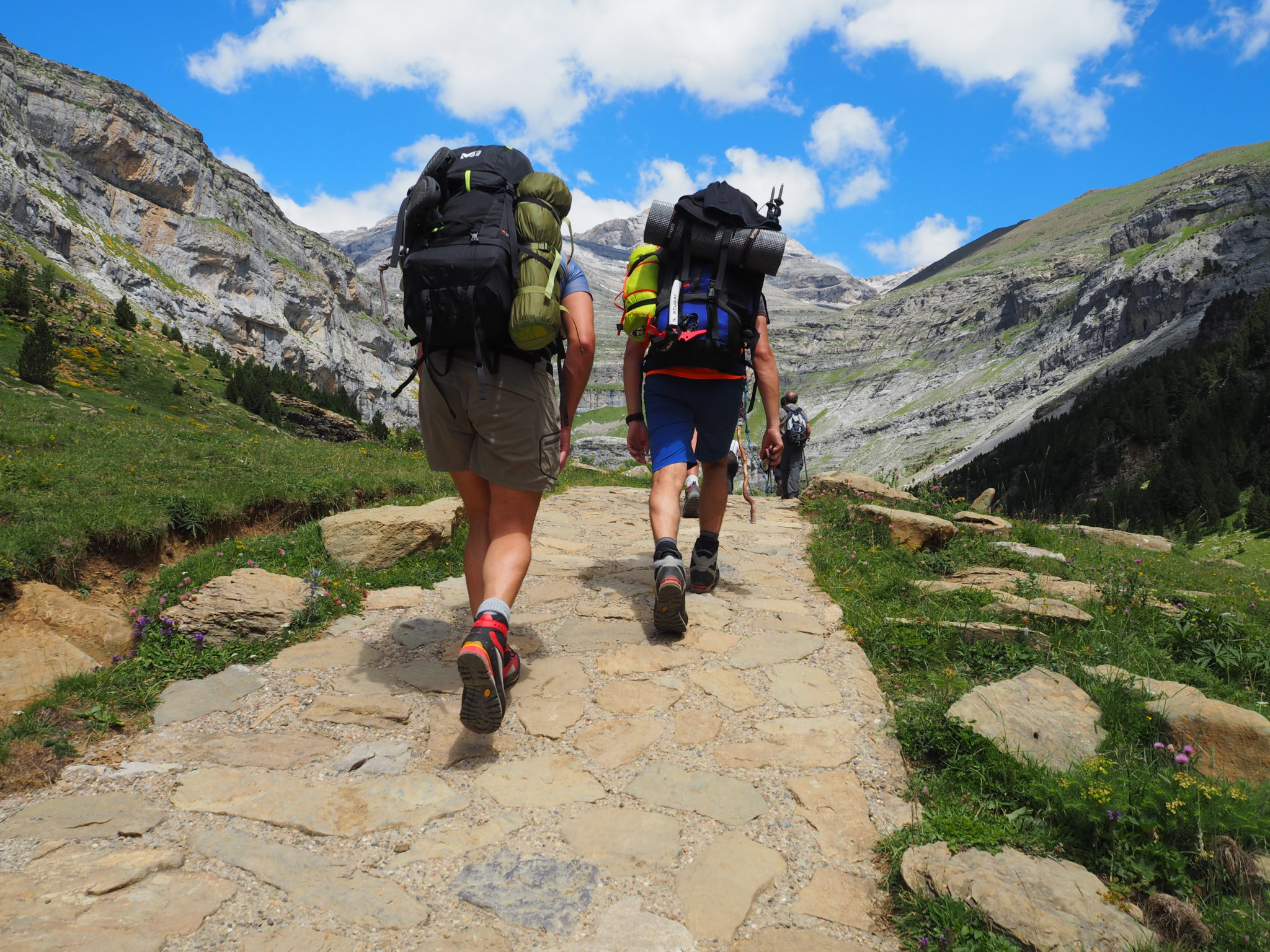
- the use of attractive and stimulating challenge-based activities as the basis of the therapeutic intervention (e.g. cooperative group games, outdoor activities or routes in natural environments)
- the positive use of stress
- personal responsibility in therapeutic change
- exposure to natural consequences associated with participation in adventure activities
- a strong ethic of care and support throughout the process
- fewer temporal and spatial limits, increasing opportunities for interaction and communication between patient and therapist
As we explain in other articles on our blog, Adventure Therapy has a specific session structure. We create a physically and emotionally safe context, we invite the person to face a challenge, we reflect during the activity or after the experience on what has happened and what is happening (how they are experiencing it, emotions that arise, coping alternatives, search for external and internal supports, for example), and afterwards we transfer what has been experienced and learned to real life (ways of responding to fear, ways of finding solutions, etc.).
As a brief example illustrating how we work in session, we can mention a rock climbing session.
We imagine a group session with adolescents at social risk. Upon arrival at the activity site, we carry out an initial circle, which we call a “check-in”, where, through a brief prompt such as “What is your hashtag for coming to today’s session?”, each person begins to connect with themselves and identify how they feel at that moment. In addition, facilitators gather information about each participant’s emotional state. At this moment, the person’s emotional safety is ensured.
After this, we review and explain materials, helmets, harnesses, ropes… here physical safety is ensured.
Once this initial phase is completed, participants are invited to face the challenge of climbing. Each participant decides how to engage in the session; perhaps one person feels more comfortable belaying from below because they need more observation time before climbing the wall, perhaps another person does not feel ready to climb or belay and adopts the role of observer or verbal supporter for another participant. In other words, participants choose their level of challenge, which may change during the session. The work is based on a philosophy of respect and free choice, accompanying the person from where they are, “going towards them” rather than leading them.
During the climbing activity, participants experience direct consequences of their decisions in real time; for example, once a person decides to climb the wall, they must take responsibility and see what they do if they feel fear when coming down, or whether they continue despite fear, whether they need to ask for help, or prefer to breathe and self-regulate, always with the support of the facilitator present. At the same time, the person involved in the challenge is not only trusting themselves but also trusting another person who is belaying them, trusting the equipment, and trusting the professionals who accompany them.
All of this process is lived in the here and now, receiving direct consequences of actions. Unlike other therapeutic modalities, the action–response–reaction–consequence process is immediate and direct. Moreover, as in the previous example, the trust practiced by the person climbing integrates at levels beyond reasoning; the experience is processed at a cellular, physical, cognitive and emotional level, becoming a highly impactful, meaningful and lasting learning experience for the participant.
Continuing with the example, while the person is facing the challenge and afterwards, facilitators accompany the process reflecting on what is happening, trying to make explicit the emotions and behaviors that are emerging. Some questions could be “What are you feeling right now?”, “What do you need to continue despite the fear you feel?”, or “It is valid to feel fear when doing something for the first time,” for example.
At the end of the activity, the group comes together again and continues processing what has happened. Participants may be invited to talk in pairs or trios about the experience (What happened? How did I feel it? What was most difficult? What did I learn from another participant? When did I overcome myself? What helped me face the challenge?). These are examples of questions used in the processing moments.
Finally, the session ends by making a transfer to real life of what has been experienced. At this moment, learning is extrapolated and linked to similar situations or behavioral patterns in daily life outside the session. For example, “Did you notice that you dared to ask for help when you felt fear or anxiety on the wall and that made you feel safer to continue climbing? How do you usually ask for help in your daily life? What things help you feel calm when you feel anxious?” This process can be individual, group-based, or in small groups.
To finish the session, a final round is held to collect sensations, emotions or special moments from the experience—what at Experientia we call “check-out”.
AT-based activities facilitate the emergence of alternative behaviors in different situations, which can enhance awareness and the creation of new meanings. The ultimate goal is that the learning derived from participation in these programs is transferred and incorporated into everyday life, reducing behaviors that diminish quality of life and increasing those that improve it, offering the individual opportunities for self-discovery, personal growth and meaningful social interaction.